
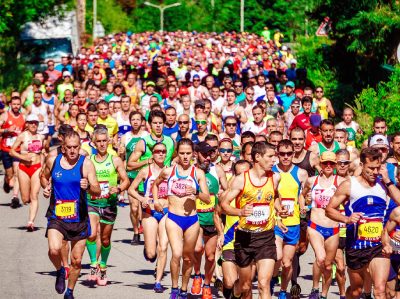
解读AI面部识别技术如何为体育节目带来新的观众
多年以前广播公司就知道,观众喜欢在高中体育比赛电视转播中看到他们孩子在场上活跃的身影。
Local broadcasters have known for years that viewers like watching their children, nephews, nieces and grandchildren playing high school sports on TV.
Some include reports in Friday night newscasts with video highlights of high-profile high school football games. Others have dedicated a multicast channel to entire high school athletic tournaments and championships. Similarly, some local cable TV operators regularly cover high school sports as well.
What if there were a way broadcasters and other video producers could tap into that same enthusiasm for watching athletes—not necessarily high school athletes, but all participants at a big event—that viewers are particularly interested in, such as a spouse, a child, a friend or co-worker?
Thanks to the power of the facial recognition algorithm running on our TVU MediaMind AI engine and the power of social media and digital distribution to augment the reach of traditional telecasts doing so not only is possible but will soon become table stakes for video producers.
Marathon Man And Woman
In 2019, more than 30,000 runners entered the Boston Marathon. In the Big Apple, nearly 54,000 runners finished the TCS New York City Marathon last year.
Most coverage of these events focuses on the leaders in the race—both the men and the women, which makes perfect sense overall. However, by taking advantage of facial recognition algorithms it is possible for broadcasters to begin rethinking how they approach their coverage.
Nothing will change as relates to the leaders in the race, but with facial recognition identifying runners as they cover the 26.2-mile course, broadcasters have the opportunity to produce custom race coverage.
Viewers who have connections to specific runners –co-workers, friends or relatives—could track their personal favorites as they progress through the race watching shots from cameras trained on the route shooting runners as they pass and the MediaMind AI engine identifying them in real time.
The Social Media Complement
Social media and online distribution can complement this AI application, making it possible for broadcasters to offer viewers personalized video footage of these runners, who typically would never or only fleetingly receive coverage during the main race.
Offering this type of coverage taps into a level of fan engagement that’s analogous to the interest in high school sports broadcasters take advantage of in their local markets. In the process, producers covering a marathon in this fashion can build audience, interest and viewer engagement in a way that otherwise is unimaginable.
Beyond the Race
The same facial recognition algorithm can be used to identify celebrities and other high-profile individuals lining the race route, opening up one or more other special-interest channels for distribution via social media and online.
Doing so further heightens interest in the race and potentially attracts a new category of viewer who never before thought about watching a marathon.
Obviously, a marathon is only one of many such applications in which video producers can leverage social media and digital along with AI facial recognition to enhance coverage and audience engagement with an anchor event.
But to paraphrase a well-known aphorism: A journey of 26.2 miles begins with a single step.
Start a Discussion
For any information on this case or for any enquiries on the above products
We can help